There was life on Mars, but no more since its core cooled down, according to a UFO contactee. Thus, plan to colonize Mars is unfeasible
There have been speculations that there was life on Mars. It has recently been confirmed by a UFO contactee that life existed on Mars in the ancient past. However, after Mars cooled down, life became unsustainable there.
When the core of a planet cools down, life becomes unsustainable
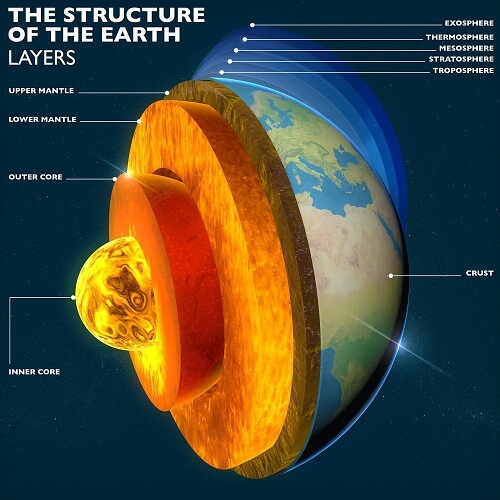
If a plant's core cools down, the magnetic field of the planet would be lost. For example, according to Cosmos Magazine, the magnetic field around the Earth is created by its outer core, which in addition to being liquid, is constantly rotating through "heat driven circulation," which creates electric currents, thus forming a magnetic field that extends around the entire planet.
When the magnetic field around a planet disappears, birds will be unable to migrate and compasses will cease to point north. More seriously, because the magnetic field protects life on the planet's surface from harmful particles coming from the sun, all life on the planet would become exposed to solar winds and radiation, which could be dangerous to the life forms on the planet. Imagine that when the atmosphere becomes extremely thin or even disappears, any life form, if any, would live in a very harsh environment.
Mars currently does not have its own magnetic field because its core cooled down long time ago, both confirmed by the modern science community and a UFO contactee
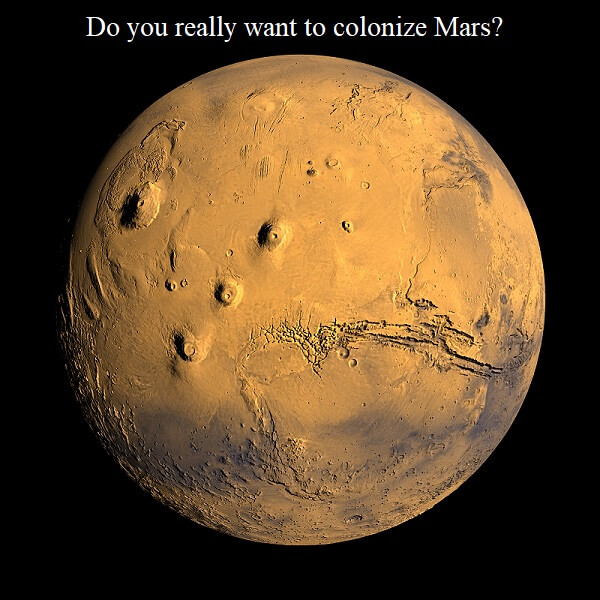
It is currently confirmed that Mars currently does not have its own magnetic field, or if it did it faded out extremely early. Therefore, its outer layer was always vulnerable to solar winds. Interestingly, this fact is also confirmed by Michel Desmarquet, a UFO contactee.
Michel Desmarquet claims that he had a contact with an extraterrestrial being from an advanced civilization. In his book Thiaoouba Prophecy, he writes about what he was told about Mars.
According to the ET, around 1 350 000 years ago, on the planet Bakaratini of the constellation Centaur, a decision was made by the leaders of that planet, following numerous conferences and reconnaissance expeditions, to send inhabited vessels to the planets Mars and Earth.
"There was a very simple reason for this: their planet was cooling down internally and would become uninhabitable within 500 years. They thought, with good reason, that it was preferable to evacuate their people to a younger planet ..."
"... they penetrated your solar system, first visiting Mars which was known to be inhabitable and which, at that time in fact was inhabited."
"The human beings on Mars had no technology but, by contrast, they were spiritually, highly evolved. They were very small people measuring in height between 120 centimeters and 150 centimeters, and of Mongoloid type. They lived in tribes, in huts of stone."
"The fauna on Mars was scarce. There was a kind of dwarf goat, some very large hare-like creatures, several species of rat, and the largest animal resembled a buffalo but had a head like a tapir. There were also some birds and three species of snakes, one of which was quite venomous. The flora was also poor, trees attaining no more than four meters in height. They had too, an edible grass that you might compare with buckwheat."
"The Bakaratinians conducted their research, realizing soon that Mars was also cooling down at a rate which indicated that it would no longer be inhabitable in four to five thousand years. In terms of its flora and fauna, it was barely rich enough to sustain those already living there, let alone cope with an emigrant mass from Bakaratini. Besides, the planet did not appeal to them."
If Mars did not appeal to our ancient alien ancestors, should we still try to colonize Mars now?
While we encourage innovation and exploration, if Mars did not even appeal to our ancient alien ancestors due to its inhabitability and hostile environment, should we still try to colonize it? Or should we increase our spirituality first and then find a better planet to migrate?
The book "Thiaoouba Prophecy" also unveils other secrets of our life on earth.
Also see: